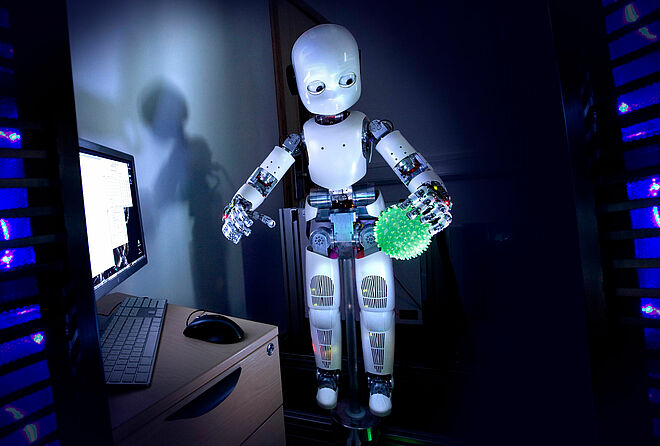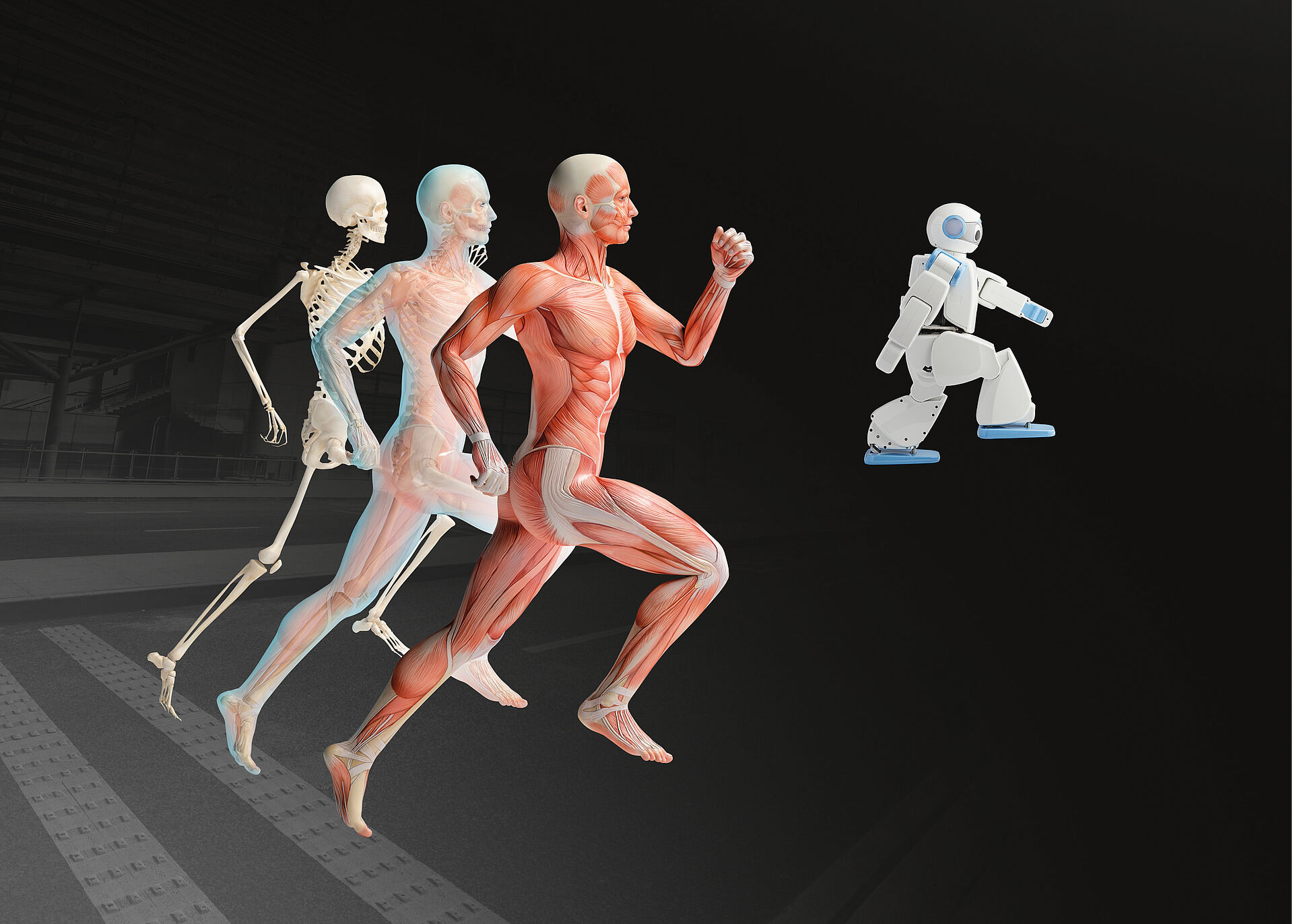
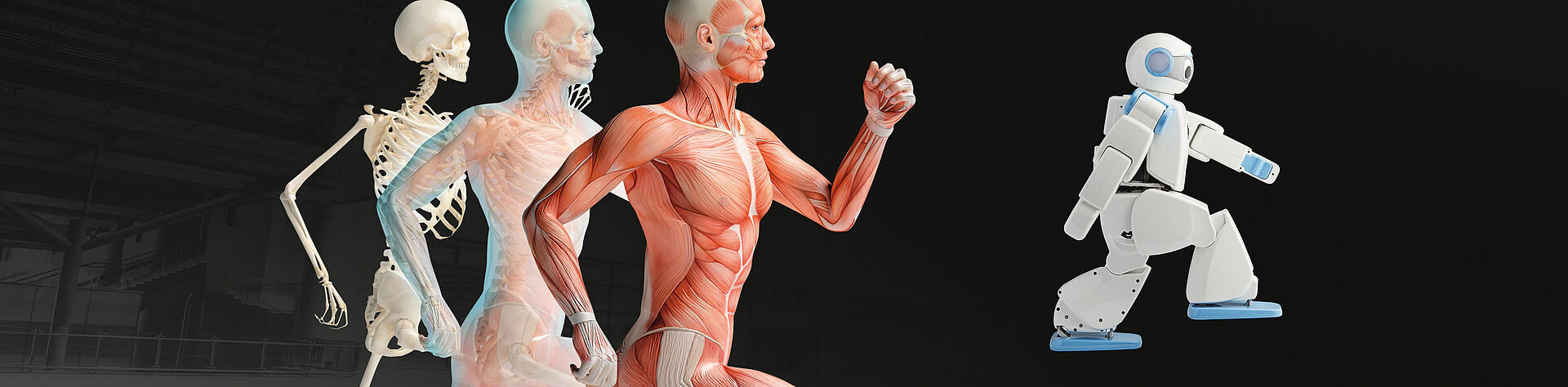

They walk, grip, balance – and fascinate with their human-like appearance: Humanoid robots have impressive mobility and are even able to interpret facial expressions or understand language. What was still a futuristic vision just a few years ago is today taking concrete shape.
Hidden behind the technological developments of humanoid robots is a complex interaction of artificial intelligence, precision mechanics and powerful drive technology. Miniaturization plays a decisive role here, as it enables compact designs with high functionality. The contribution of FAULHABER and the use of modern technologies are setting the course for the next stage in the evolution of robotics.
Humanoid robots form the interface between artificial intelligence and the real, physical world. They are able to process not only digital information but also transform this into concrete actions. If the sequences of movements function smoothly and safely, humanoid robots can perform a number of tasks that were previously reserved for humans – be it in hazardous environments, in direct contact with people or in repetitive processes. They assist in the household, support with rehabilitation, interact with older people or are used in retail business. Their strength is in their versatility and ability to adapt to human environments.
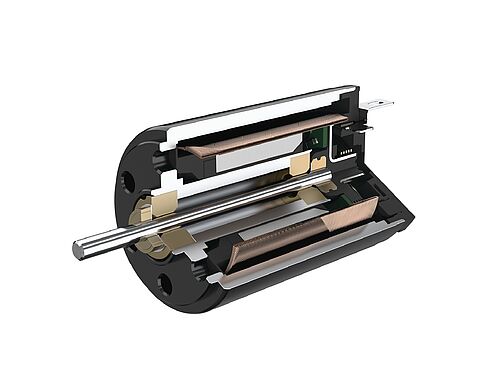
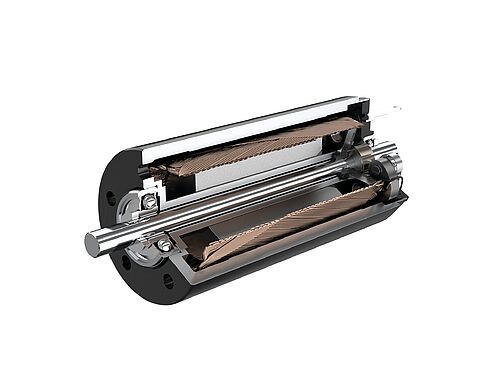
At the core of every movement performed by a humanoid robot is a precise drive system. It decides how smoothly an arm is raised, how quickly a leg can respond or how gently a finger grips. Drive technology thereby has a significant impact on the performance, naturalness and safety of humanoid movements. The miniaturization, energy efficiency, dynamics and precision are central requirements here – an interaction that can be realized only with highly developed micromotors. These are all aspects that are decisive not only in robotics but also in prosthetics. The transition between humanoid robots and prosthetics is a seamless one.

Micromotors are used not only in humanoid robots but have also found application in robotized aids such as motorized hand and leg prosthetics. Whether for delicate finger movements or powerful stepping motions – the high-precision drive systems from FAULHABER enable maximum mobility in the smallest of spaces. This is especially advantageous in dynamic movements that are necessary for replicating human gestures. Particularly as these systems are increasingly interacting directly with people, safety aspects and excellent controllability play a key role.
The development of suitable concepts is essential for enabling a smooth and – above all – safe cooperation between man and machine. This is not just a question of the software control – protective mechanisms must also be integrated in the drive solution itself. FAULHABER takes this need into account with drive solutions that are both powerful and compact as well as designed for safety – ideal for demanding tasks in robotics and medical technology. The close collaboration with leading research institutes and development partners ensures that FAULHABER technology always remains on the cutting edge.
Humanoid robots are machines with a human-like appearance. Typical characteristics are a torso-like structure, head, arms and legs - sometimes with facial features or facial expressions - as well as the ability to move upright. The aim is to replicate human behavior as realistically as possible so that they can be used both physically and socially in everyday contexts. The technological core is a complex interplay of artificial intelligence, sensors, precise mechanics and powerful drive technology. This enables them not only to process digital information, but also to translate it into concrete actions - such as walking, grasping or communicating.
The main difference between humanoid robots and other types of robots is their human-like shape and way of moving. While industrial robots are usually stationary and designed for specialized tasks such as welding or assembly, humanoid robots have a body-like structure. This form allows them to move and interact in human environments, based on human behavior. In addition, humanoid robots are designed for direct contact with humans. Their ability to adapt and take on a variety of tasks sets them apart from conventional robotic systems.
In short, humanoid robots are designed for social interaction and flexible mobility, while traditional robots are usually optimized for repetitive, specialized tasks in fixed environments.
Humanoid robots are used wherever intelligent machines need to interact directly with humans. Thanks to safe motion sequences, they can perform a wide range of tasks - from gripping sensitive objects to communicating with people. Their great strength lies in their versatility and ability to adapt flexibly to human environments. Areas of application include care, service tasks in hotels, retail and information desks. In research, they are used as test platforms for human-machine interactions and robotic assistance systems, while in manufacturing environments they take over production tasks on the assembly line. They can also be used in hazardous areas to protect people from risks. As an interface between artificial intelligence and the real world, humanoid robots open up a wide range of potential applications that is constantly growing.
A humanoid robot combines a variety of highly developed technologies that together ensure that it can move, perceive and act like a human being. At the heart of this is artificial intelligence (AI), which helps the robot to understand language, make decisions, learn from experience and interact with people. Precise drive systems are crucial for the ability to move - for example, miniature motors in joints that enable smooth, coordinated movements. These actuators ensure that the robot can walk, grasp or gesticulate - as dynamically and safely as possible. At the same time, a comprehensive sensor system is used: cameras, microphones, force sensors, gyroscopes and distance meters help the robot to detect its surroundings, recognize objects or communicate with people. This is complemented by a mechanical design that is geared towards lightweight construction, stability and ergonomics. The result is a highly complex system that intelligently links software and hardware - making the seemingly human technically feasible.
At the heart of every movement of a humanoid robot is a precise drive system. It determines how smoothly an arm lifts, how quickly a leg reacts to a signal or how finely a finger can grip an object. Whether the interplay of movement, force and coordination is convincing depends largely on the quality of the drive technology used. The demands on this technology are extremely high, especially for humanoid robots: movements should not only be functional, but also as natural and safe as possible - especially in direct contact with humans. This requires powerful micromotors that are compact, energy-efficient, dynamic and precise. Miniaturization plays a key role: motors have to deliver maximum performance in limited installation space - for example in joints, gripping hands or rotating elements of the head. At the same time, energy consumption must remain low to ensure the longest possible service life.
We specialize in adapting our standard product range to the requirements of customer-specific applications. Thanks to the reliability and versatility of our solutions, they are used in robotics, medical technology, in modern laboratory analytics, in logistics or in the aerospace sector.
Tell us about the specific requirements of your application and together we will develop a modified drive solution based on the modular technology system of our product range.